
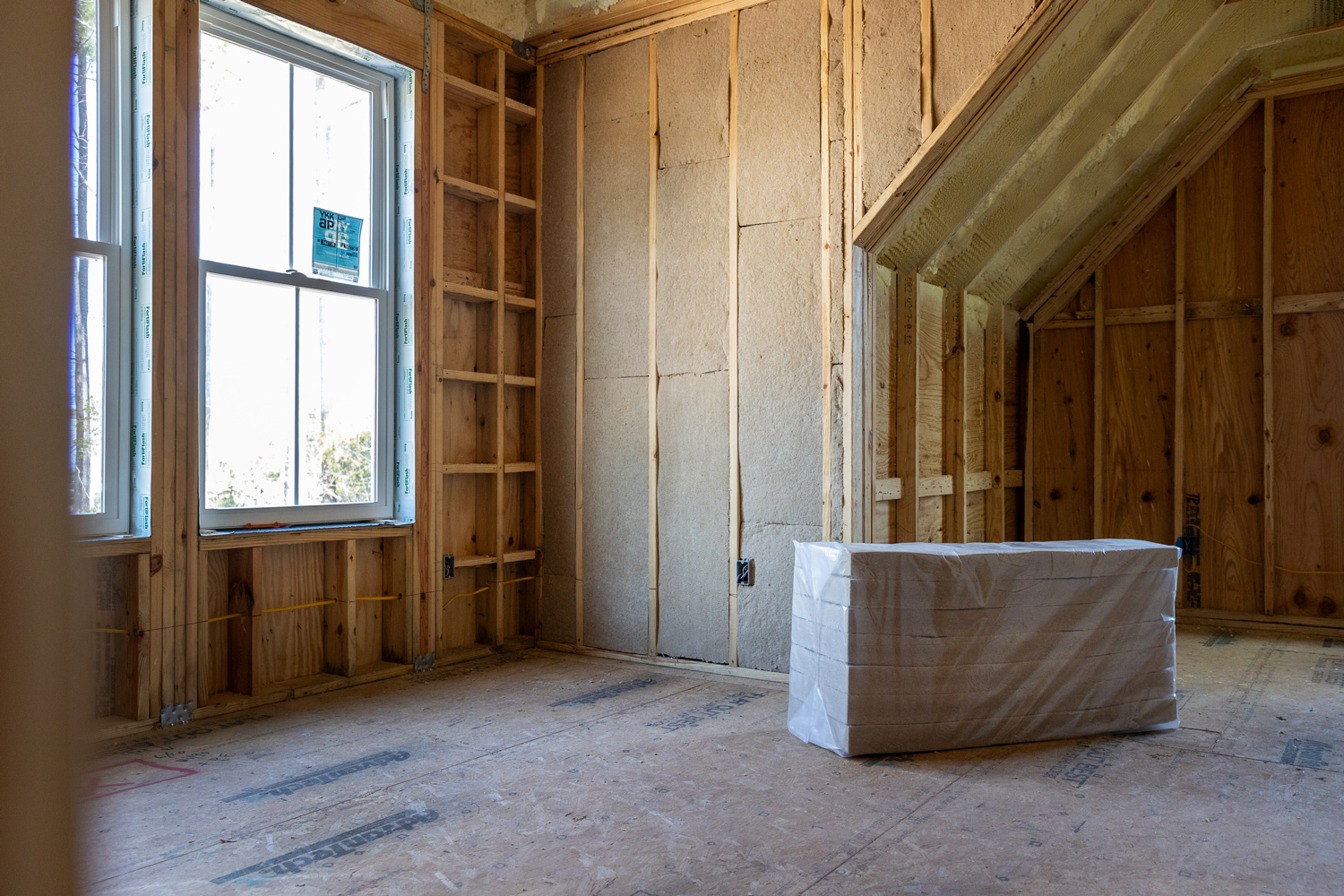
A home’s carbon footprint is influenced by many decisions made during construction. Insulation is one decision that considers both the materials used in a building and the energy required to operate it over time.
Green insulation products like Natura Batts are made from renewable wood fibers sourced from responsibly managed forests. Wood naturally stores carbon, and when used in insulation, that carbon remains sequestered for the life of the product. Natura’s manufacturing process results in a carbon-negative outcome, meaning more carbon is stored than emitted during production.
Energy efficiency plays an equally important role. Well-insulated homes require less energy for heating and cooling, reducing long-term energy consumption and associated emissions. Natura provides reliable thermal performance that helps maintain indoor comfort while easing the workload on HVAC systems.
Durability also contributes to sustainability. Natura resists moisture, mold, and fire, helping maintain performance over time. Products that last longer reduce material waste and the need for replacement, which further lowers environmental impact.
Manufacturing location matters as well. Natura is produced in the Southeast, minimizing long-distance transportation and the emissions that come with global supply chains. Regional production also improves availability and reduces delays for builders.
For homeowners, green insulation supports healthier indoor air quality. Natura is non-toxic and VOC-free, contributing to cleaner living spaces while aligning with sustainability goals.
Choosing green insulation supports energy efficiency, responsible material sourcing, and reduced carbon impact. It is a practical step toward building homes that perform better today and remain resilient for the future.